
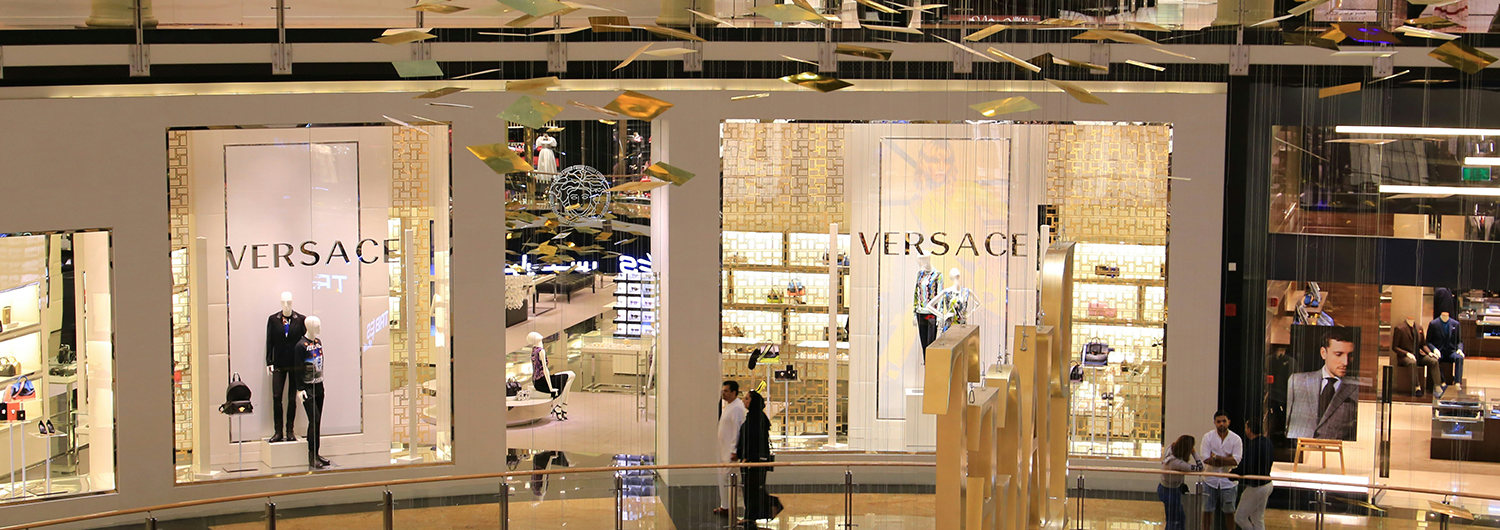
Is your brand struggling to stand out in multibrand environments or to maintain flawless consistency between your own stores and your retail partners? Luxury retail displays are no longer simple merchandising tools—they have become strategic brand assets capable of unifying your image, boosting conversion, and recreating exclusivity even in environments you don’t fully control.
This article explores the shift from passive POS materials to immersive, sensory-driven and premium storytelling spaces, essential at a time when consumers move seamlessly between digital and physical touchpoints. You’ll uncover the modular, interactive, and sustainable innovations that are redefining in-store impact—whether in a flagship or a multibrand retailer.
Beyond Aesthetics : The Rise of Sensory-Driven Brand Experiences
Recreating Your Brand Universe in Spaces You Don’t Fully Control
In multibrand stores, the first battle is attention. You must recreate your brand universe without being able to redesign the entire environment. The display is no longer decor—it is a brand capsule, a condensed expression of identity.
Storytelling Through Space, Light, and Materials
Your display must act like a mini-flagship: telling your brand’s story, showcasing your heritage, and expressing your creative language.
In your own stores, it ensures consistency. In multibrand spaces, it helps your brand stand out amid dense competition.
Lighting becomes a powerful tool: it dramatizes, highlights craftsmanship, and guides attention—even when you don’t control the store’s overall ambiance.
The “less is more” philosophy is essential. A refined design:
- Enhances luxury perception,
- Makes each product feel more exclusive,
- Integrates seamlessly into varied retail environments.
Engaging All Senses to Strengthen Brand Identity
In your own stores, full immersion is possible.
In multibrand environments, the goal is to create a sensory micro-universe strong enough to express your codes in seconds.
Brands increasingly leverage:
- Premium materials (brushed metal, noble woods, leather) → immediate signal of quality
- Tactile textures → encouraging touch, which increases reassurance and conversion
- Subtle soundscapes or signature scents (when allowed by the retailer) → strong emotional anchors
In shared retail spaces, these elements become powerful markers of exclusivity.
When Digital Meets Physical : Interactive Displays as Conversion Tools
Digital That Enhances the Brand, Not Distracts From It
Your presence in multibrand networks should never feel like a consumer electronics aisle. Digital integration must be invisible, elegant, and aligned with your brand identity.
Example:
A transparent OLED screen overlaying a product can reveal craftsmanship or share stories while keeping the physical item fully visible.
Empowering Customers—Even When Staff Isn’t Trained on Your Brand
In multibrand stores, sales associates are not always knowledgeable about your brand.
Interactive POS becomes a silent salesperson:
- AR try-ons for accessories, watches, jewelry, beauty
- NFC or QR codes offering complete, consistent, multilingual information
- Smart mirrors or recommendation modules in your own boutiques
The goal is straightforward :
➡ Deliver a rich, controlled brand experience even without trained staff.
➡ Ensure the same storytelling in a 2 m² multibrand corner as in a 200 m² flagship.
The Next Frontier : Sustainability and Circularity in Display Design
Creating Displays That Adapt to Every Store Format
The era of luxurious, single-use displays is over.
Leading brands now invest in modular systems that:
- Adapt to each launch,
- Transition smoothly between own stores and retail partners,
- Exist in multiple configurations depending on available space.
This is crucial for brands deployed across diverse channels and markets.
Designing for Circularity From Day One
| Aspect | Traditional Display Model | Circular Display Model |
|---|---|---|
| Design Philosophy | Single-use, campaign-specific | Modular, reconfigurable, timeless |
| Materials | Composite, hard to separate | Recycled, upcycled, or designed for disassembly |
| End-of-Life | Landfill | Re-use, upcycling, or material recovery |
| Flexibility | Low (total replacement) | High (components can be swapped out) |
This evolution is simultaneously:
- Eco-responsible,
- Cost-efficient,
- And strategically essential for brands operating across many retail partners.
From Design to Deployment : Protecting Brand Integrity Worldwide
Ensuring Consistency Across Own Stores and Multibrand Retailers
Your brand must feel identical everywhere.
Customers should not perceive a difference between a flagship store, a premium corner, or a multibrand point of sale.
This requires :
- Robust and adaptable design,
- Consistent manufacturing quality,
- Reliable global logistics,
- Precise installation—even remotely.
Top-tier POS manufacturers provide turnkey rollout solutions to guarantee flawless execution across markets.
Adapting Without Diluting the Brand—The Key to Multibrand Success
Overly rigid display systems fail in real-world conditions. Great brands know how to adapt:
- Materials (e.g., aluminum instead of steel in markets with load restrictions)
- Sizing (height, width, depth adjusted per country/store)
- Interaction level based on local customer behavior
The art lies in maintaining your core brand DNA while offering the flexibility required for diverse retail environments.
Conclusion
Modern luxury retail is no longer about exposure—it’s about immersion.
For a brand present in both owned stores and multibrand networks, displays have become:
- A brand ambassador,
- A storytelling platform,
- A conversion driver,
- A consistency enforcer.
By combining sensory storytelling, integrated digital, circular design, and global deployment expertise, your brand does more than occupy space—it creates memorable, coherent, high-performance retail experiences everywhere it is seen.