
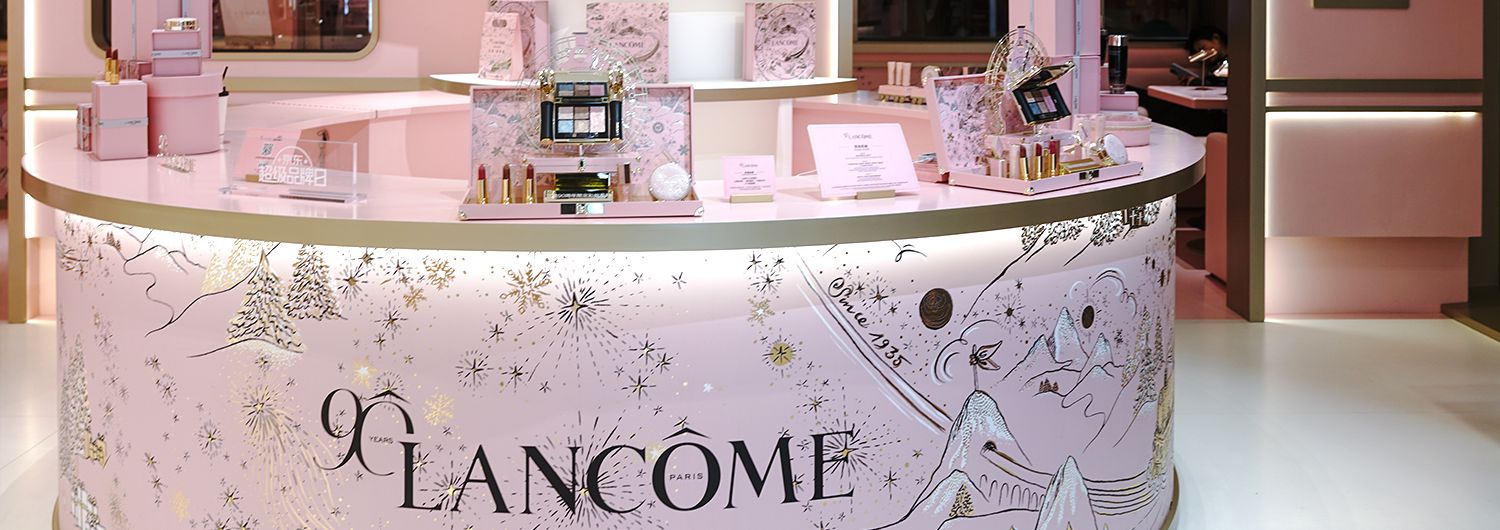
Is product discovery in your store declining — not because customers lack interest, but because your layout overwhelms their attention ? Modern retail environments are saturated. Endless assortments, repetitive shelving, and predictable pathways reduce curiosity and increase cognitive fatigue. When shoppers feel overloaded, they default to routine purchases and avoid exploration. Strategic in-store displays break this cycle. By combining visual hierarchy, structured design thinking, and controlled disruption, retailers can reintroduce meaningful discovery — and convert attention into measurable revenue growth.
Why Product Discovery Is Declining — and What Retailers Can Do About It
The Cognitive Fatigue of the Modern Shopper
Research in consumer psychology shows that excessive choice reduces engagement and lowers satisfaction. When shelves are overcrowded with near-identical products, the brain conserves energy by ignoring new options.
This leads to :
• Reduced browsing time
• Lower engagement with secondary SKUs
• Increased reliance on habitual purchases
When discovery declines, so does incremental revenue. Simplification and visual prioritization are not aesthetic decisions — they are commercial strategies.
Interrupting Autopilot Behavior
Shoppers develop habitual movement patterns. They follow the same paths and visually filter out familiar structures. Breaking autopilot requires intentional disruption — not chaos, but contrast. Effective disruption includes :
• Variation in display height
• Focal lighting accents
• Controlled asymmetry
• Unexpected product grouping
Studies in retail environments show that even minor changes in visual rhythm can increase fixation time and encourage product interaction. Discovery begins where predictability ends.
3 Visual Cues That Increase Product Discovery
Strategic display design influences attention, dwell time, and conversion.
Targeted Lighting as a Micro-Focal Tool
Accent lighting embedded within displays creates hierarchy at shelf level. When a specific product zone is brighter than its surroundings, the eye naturally moves toward it. This increases:
• Visual fixation time
• Perceived importance
• Engagement with featured items
High-contrast lighting can increase dwell time in highlighted zones — a key precursor to conversion. Lighting is not decoration. It is direction.
The Rule of Three for Visual Clarity
The human brain processes small grouped clusters more efficiently than crowded assortments.
Grouping products in threes :
• Reduces perceived clutter
• Encourages scanning
• Creates rhythm
Odd-numbered arrangements prevent monotony while maintaining clarity. Combined with varied height and depth, this technique enhances product storytelling without overwhelming the shopper. Clarity fuels curiosity.
Strategic Use of Negative Space
Empty space is not lost revenue. It is visual oxygen. Luxury brands frequently use controlled spacing to :
• Increase perceived value
• Signal exclusivity
• Improve SKU recognition
When products are allowed breathing room, edges become visible, branding becomes legible, and decision-making becomes easier. Simplification increases conversion.
Applying the Double Diamond Framework to Shelf Design
Moving from tactics to structure ensures displays are not only attractive — but profitable.
Divergent Thinking — Expanding Display Possibilities
In the discovery phase, teams should explore :
• Alternative product pairings
• Cross-category storytelling
• Sensory triggers (texture, lighting, color contrast)
• Traffic flow variations
Frontline staff insights are particularly valuable. They observe hesitation, confusion, and engagement patterns daily. Innovation often begins at shelf level.
Convergent Thinking — Selecting for Performance
Creative ideas must then be filtered through data.
Evaluate :
• Conversion rate per display zone
• Dwell time changes
• Margin performance by featured SKU
• Incremental basket contribution
Pilot testing in a single location allows performance validation before rollout. Displays must justify space through measurable lift.
Two Common Merchandising Mistakes That Kill Discovery
Even experienced retailers fall into structural traps.
Overloaded Endcaps
Overcrowded endcaps reduce impact. Instead of signaling abundance, excessive density creates visual noise. Research consistently shows that simplified displays outperform cluttered ones in attention capture. Fewer SKUs with stronger storytelling generate stronger recall.
Misapplying the “Eye-Level Is Buy-Level” Rule
Eye level remains important — but it is not universal.
Different shopper segments interact with space differently :
• Children scan lower
• Bulk buyers engage waist-level
• Premium shoppers respond to curated vertical isolation
Vertical diversity increases exposure across demographics and encourages physical interaction. Discovery thrives on intentional placement — not rigid formulas.
Conclusion
Product discovery is not disappearing — it is being suppressed by visual overload and structural predictability. Strategic in-store displays reintroduce clarity, contrast, and curiosity into the retail journey. When lighting hierarchy, controlled grouping, negative space, and structured design thinking align, displays shift from passive shelving to active commercial drivers. Retail growth does not require more products. It requires better presentation !